



Introduction
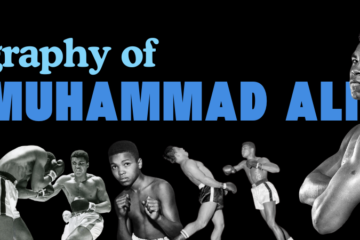
Muhammad Ali was a phenomenon not only because he was a boxing champion but because he represented strength, conviction, and appeal. Famous for being the greatest heavyweight boxing champion of all time, Muhammad Ali became a voice to be reckoned with when it came to the issue of civil rights, religious tolerance, and human rights. The fact that he was fast, talented, and confidently robust and charismatic in the boxing ring matched his personality and conviction outside the ring as well. From being an Olympic gold boxing Medalist to leaving an enduring impact of athletes upon society, the life of Muhammad Ali is one of the most inspiring of all time.
Early life and Background
Birth and Childhood
His name at birth was Cassius Marcellus Clay Jr. He was born on the17th of January in 1942. His place of birth was Louisville, Kentucky, in the United States of America. This was in a racially segregated community. The discriminative acts against the African American population had always been part of this community. He had a sign painter father and a mother who was a domestic worker. Despite financial limitations, Ali’s parents emphasized discipline and self-respect.
Introduction to Boxing
Ali’s life took a dramatic turn when he was 12 due to the theft of his bicycle. He used the name Cassius Clay back then. He went to a police officer to register a complaint against the theft of his bicycle. He began to learn how to box from the police officer, who was a surprisingly a boxing coach as well, because he wanted to learn how to defend himself.
Important Initial Accomplishments:
- Six Kentucky Golden Gloves championships won
- Became an amateur boxing star
- Original and rapid style of boxing
Olympic Glory and Amateur Success
Ali was only 18 years old in 1960. He represented America at the Olympic Games held in Rome. He won the gold medal in light heavyweight, overcoming many international-level boxers.
This achievement at the Olympic Games brought him national recognition and opened paths for his future career in professional boxing.
Professional Boxing Career
The Road to Heavyweight Championship
He turned professional in 1960, and his speed, quick feet, and talking abilities caught fans attention as a promising young fighter. He did not possess qualities necessary for a heavyweight fighter; instead, he utilized his agility.
In 1964, he shocked the world by defeating Sonny Liston to become the youngest heavyweight champion at the time.
His famous quote after the fight:
“I am the greatest!”
This victory marked the beginning of the new era for boxing.
Name Change and Religion
Not long after his victory, Ali declared his acceptance of Islam and his adoption of a new name, Muhammad Ali, instead of Cassius Clay, his family name, because his last name, Cassius Clay, was a “slave name” and did not represent who he was.
Although this was a controversial issue, it was a very significant one, as it marked his faith, self-respect, and independence.
Vietnam War Protest and Suspension
Draft Refusal
Muhammad Ali refused to be drafted into the military forces of the United States during the Vietnam War because of religious beliefs and war objections. This took place in 1967.
This act of defiance had the following consequences
- Loss of boxing titles
- Three-year ban from professional boxing
- Prosecution of a person for their treason against the state.
This act of defiance marked him as a symbol of resistance and the civil rights movement.
The Legendary Comeback, The Iconic Fights
After that, he resumed boxing in the year 1970 and fought the toughest boxers of all time.
Most Iconic Fights
- Fight of the Century (1971): vs. Joe Frazier
- Rumble in the Jungle (1974): Won vs. George Foreman by the famous rope-a-dope
- Thrilla in Manila (1975): Brutal trilogy versus Joe Frazier
These fights are thought to be among the greatest in the history of boxing.
Career Achievements & Records
Major Accomplishments
- World Heavyweight Champion: 3 Times
- Professional Record: 56 wins, 5 losses
- Knockouts: 37
- Olympic Gold Medalist (1960)
- “Sportsman of the Century” published By Sports Illustrated
The influence of Ali was not merely statistical, as Ali affected not only the way in which boxing was conducted, he changed how boxing was done and promoted.
Struggling Around Health and Parkinson’s Disease
Muhammad Ali was also diagnosed with Parkinson’s disease back in 1984. Parkinson’s disease is a Neurological disorder that is linked to head trauma that Ali went through during his boxing days.
Despite the physical restrictions he had imposed on himself, Ali had been involved in the following activities
- Community/charity work
- International peace missions
- Parkinson’s Information and awareness
His fight with the ailment helped raise international awareness on the concerns relating to the health of the nervous system.
Humanitarian Works and Global Reach
Muhammad Ali gave his dedication to a lot of humanitarian causes in his later years.
Main Outcomes
- United Nations Messenger of Peace
- Advocate of racial equality and religious tolerance
- Raised funds for charity and health-related issues
His lighting of the Olympic torch during the 1996 Olympics in Atlanta is still one of the most emotive moments in sport.
Death and Legacy
Muhammad Ali passed away on June 3, 2016. He was 74 years old at the time of his death. International tributes were given to Muhammad Ali.
Why Muhammad Ali’s Legacy Continues to Endure
- Revolutionized boxing style and promotion
- Proved athletes can stand for principles
- Confirmed sportsmen can contest on ideology
- Inspired generations across cultures and continents
Has inspired generations all over the world, Ali is remembered as a boxing champion and as a human rights warrior.
Conclusion The life of Muhammad Ali is one which is filled with fearless belief, selfless duty, integrity, sacrifice and moral courage. Muhammad Ali was a boxing prodigy who was a master of his chosen profession. He challenged injustice and redefined the role of athletes in society. His legacy continues to inspire people to stand up for what’s right and their beliefs, no matter the cost. He was the greatest in the ring and timeless beyond it.
